Progrevia requiere JavaScript

Este generador de rutinas necesita JavaScript para funcionar. Activa JavaScript en tu navegador y recarga la página.

Progrevia needs JavaScript to work. Please enable JavaScript in your browser and reload the page.

Progrevia a besoin de JavaScript pour fonctionner. Active JavaScript dans ton navigateur et recharge la page.

Recargar / Reload / Recharger
Skip to main content
  1. Home
  2. Blog
Workouts · Technique · Nutrition · Science
Blog Progrevia

Guides on hypertrophy, strength, fat loss and recovery, each with the studies behind it cited at the end.

every one cites its studies

  1. Home
  2. Calculators
  3. BMI
Free calculator

BMI calculator: body mass index and healthy weight

Work out your body mass index, see which WHO category you fall into and the weight range that matches your height. If you add your waist, you also get the waist-to-height ratio, a finer indicator of risk.

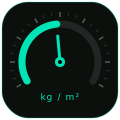
Illustration of a dial showing the body mass index
Units
Waist · optional

It runs in your browser: we do not send or store your data.

Your BMI— kg/m²
—Category (WHO)
—Healthy weight for your height
—Waist-to-height ratio
—Assessment
Generate your routine for this goal →

How BMI is calculated

Body mass index is your weight in kilos divided by your height in metres squared: BMI = weight / height². A person who weighs 70 kg and is 1.75 m tall has a BMI of 70 / (1.75 × 1.75) = 22.9.

The WHO categories

BMI classification in adults according to the World Health Organization (2000)
BMICategory
Under 18.5Underweight
18.5 to 24.9Normal weight
25 to 29.9Overweight
30 to 34.9Obesity class I
35 to 39.9Obesity class II
40 or moreObesity class III

With those cut-offs, the calculator gives you the weight range that matches a BMI of 18.5 to 24.9 for your height: for 1.75 m, from 56.7 to 76.3 kg.

What BMI cannot see

BMI does not tell muscle from fat. In the study by Romero-Corral and colleagues (2008), with 13,601 adults from the US NHANES III survey, a BMI of 30 or more was almost never wrong when it flagged obesity (specificity of 95% in men and 99% in women), but it missed more than half of the people with excess fat: its sensitivity was 36% in men and 49% in women. It failed mostly in the intermediate range, between 25 and 29.9.

If you do strength training and carry a lot of muscle, you can show as overweight without having excess fat. To find out how much fat you carry, use the body fat percentage calculator.

The waist-to-height ratio

The systematic review by Ashwell, Gunn and Gibson (2012), with studies of more than 300,000 adults, found that the waist-to-height ratio detects cardiometabolic risk (high blood pressure, type 2 diabetes, abnormal cholesterol) better than waist circumference and BMI. The practical cut-off is 0.5: keep your waist to less than half your height.

In the analysis by Ashwell and Gibson (2016), 35% of the people that a combined BMI and waist classification placed at no increased risk had a ratio of 0.5 or more. And those with a healthy BMI and a ratio of 0.5 or more had some significantly higher cardiometabolic risk factors.

How to measure your waist

Stand relaxed, at the end of a normal breath out, with the tape level at your navel and without pulling it tight. If you want to bring it down, we explain how in how to lose belly fat and in body fat percentage: chart by age.
Frequently asked questions

What is a normal BMI?

Between 18.5 and 24.9 in adults, according to the World Health Organization. Below 18.5 is underweight, 25 to 29.9 is overweight and 30 or more is obesity.

Is BMI accurate if I lift weights?

Not entirely: BMI does not tell muscle from fat. In the study by Romero-Corral and colleagues (2008), a BMI of 30 or more missed more than half of the people with excess fat, and it failed mostly between 25 and 29.9.

Which is better, BMI or waist-to-height ratio?

For cardiometabolic risk, the waist-to-height ratio. The review by Ashwell and colleagues (2012), with more than 300,000 adults, found it better than BMI and than waist alone. The rule of thumb is to keep your waist to less than half your height.

How much should I weigh for my height?

The range that matches a BMI of 18.5 to 24.9: your height in metres squared multiplied by 18.5 and by 24.9. For 1.75 m, from 56.7 to 76.3 kg.

Other calculators

From numbers to a plan

Calories and protein supply the fuel; training decides what you do with it. Generate a free routine built around your goal, your level and your equipment.

Generate your routine for this goal
References
  1. World Health Organization. Obesity: preventing and managing the global epidemic. Report of a WHO consultation. WHO Technical Report Series 894. Geneva: WHO; 2000.
  2. Romero-Corral A, Somers VK, Sierra-Johnson J, Thomas RJ, Collazo-Clavell ML, Korinek J, et al. Accuracy of body mass index in diagnosing obesity in the adult general population. International Journal of Obesity. 2008;32(6):959-966.
  3. Ashwell M, Gunn P, Gibson S. Waist-to-height ratio is a better screening tool than waist circumference and BMI for adult cardiometabolic risk factors: systematic review and meta-analysis. Obesity Reviews. 2012;13(3):275-286.
  4. Ashwell M, Gibson S. Waist-to-height ratio as an indicator of 'early health risk': simpler and more predictive than using a 'matrix' based on BMI and waist circumference. BMJ Open. 2016;6(3):e010159.
  1. Home
  2. Blog
  1. Home
  2. Log in
Welcome

No account? Sign up free

or
  1. Home
  2. Sign up
Create account

¿Ya tienes cuenta? Log in

We will send you service emails (verification, security) and, at most, 4 one-time reminders (one if you don't generate your first routine and, if you stop signing in, one each at 7, 30 and 90 days). If you don't want them, tick the box below; you can also turn them off from your account or via the link in any of those emails.

  1. Home
  2. Sign up
  3. Verify email
📬
Verify your email

Enter the 6-digit code we sent you

  1. Home
  2. Log in
  3. Reset password
🔐
Recover access

Enter your email and we will send you a code.

or
  1. Home
  2. Log in
  3. New password
🔑
New password

Code sent to your email. Expires in 15 minutes.

or
  1. Home
  2. My account
Your dashboard
  1. Home
  2. Generator
1
Data
2
Goal
3
Plan
4
Preferences
5
Confirm
20%
Personal data

Basic info to calibrate your routine precisely

years
kg
cm
Your goal

Define the direction of your training

Optimal rep range
5–15 reps depending on the day · RIR 3–4 → 1–2 · Volume: 12–20 sets/week per muscle group
Planning

Set your weekly availability

4 days → Upper/Lower · higher frequency per group (2×/week)
60 min
Optimizes exercises

The engine adapts the exercise library based on the equipment you have available.

If disabled, the routine, PDF and email will not include the warm-up section.

Preferences

Customise the exercises in your routine (optional)

Exercises you enjoy the most. We will prioritise them in the selection — they will appear more often in your routine if they fit your goal.

✓ Top priority · higher frequency

Select the exercises you want to include in your routine

Specific exercises you want out of your routine. We swap them for others working the same muscle group, so you do not lose that work.

✗ Swapped for an alternative

Leave it empty if there is none you want to avoid

Groups you prefer not to train — by preference, accumulated fatigue or any other reason. We will omit them entirely from your routine.

✗ Omitted from the entire routine

Indicate any injured or sensitive area. We will automatically exclude exercises that could aggravate it and apply a safe alternative training protocol.

🛡 Safe protocol activated

Injuries are health data (Art. 9 GDPR). By selecting them you explicitly consent to their processing for the sole purpose of excluding contraindicated exercises. Optional field — you can withdraw consent by removing them. More info in the Privacy Policy.

The groups you want to develop most. They will receive +1 set per exercise, more selected exercises and a priority position in the session.

★ +1 extra set · priority position
Summary

Review your settings before generating

The name will appear in your history, PDFs and emails.

Generating your routine
Spreading the sets across muscles…
Profile
Analysis
Exercises
Plan
Your personalized routine
Why this routine for you
Auto-generated This routine was generated automatically by our own engine from the data you provided. It has not been reviewed by a healthcare professional.
Generated routines are for informational purposes only. They do not constitute medical advice. Consult a professional before starting if you have injuries or health conditions.
  1. Home
  2. Train

⚠️ You train at your own risk. Suggested loads are guidance only: increase them only if your technique is solid and pain-free. This does not replace advice from a medical professional or trainer. If you feel pain or get injured, stop and consult a specialist.

  1. Home
  2. History
  1. Home
  2. My account
  3. Settings
Information
Language
Security
Reminders
  1. Home
  2. Contact
Contact

Escríbenos a [email protected]