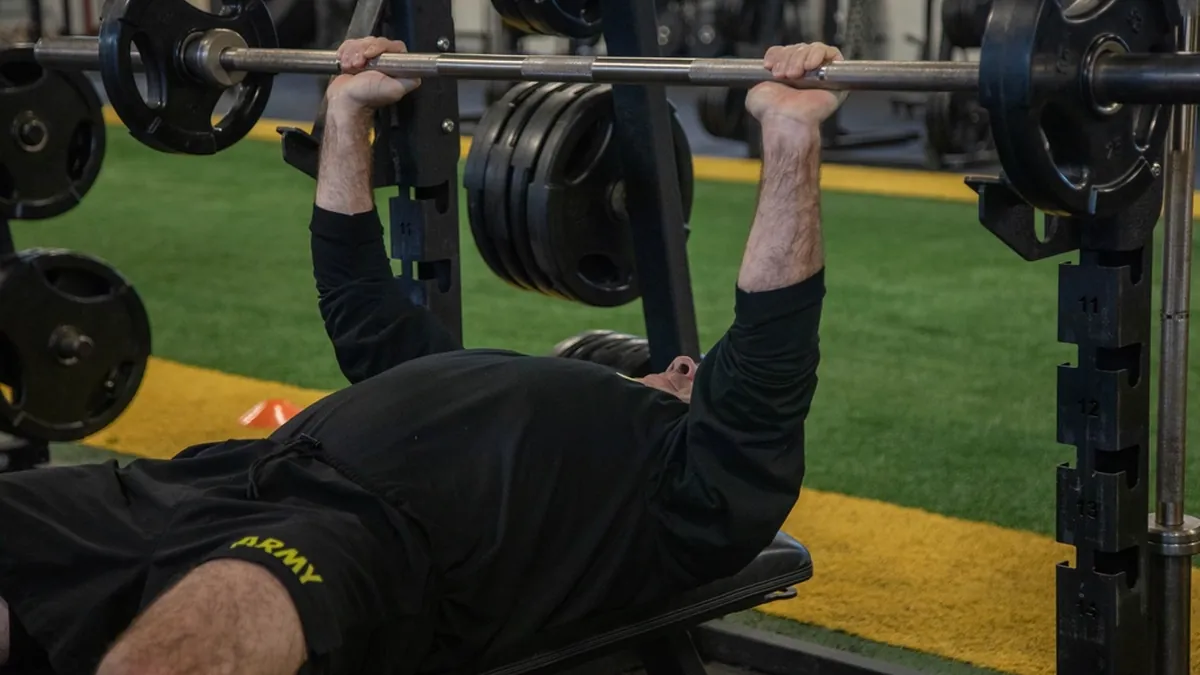
Bench press: correct technique step by step and the 7 mistakes stalling your progress
Published on
It is the most popular exercise in the gym and one of the worst executed. Back setup, grip, bar path, and the mistakes that stall your bench or hurt your shoulder.
The bench press is the horizontal pushing movement par excellence: it works the chest, front delts and triceps. It is also the exercise where the most technical errors show up, because it looks simple - lie down and push - when it is actually a full-body lift with a precise setup.
The setup: 50 per cent of the bench press happens before the bar moves
- Scapular retraction: pull the shoulder blades together and down (think of tucking them into your back pockets). This creates a stable base, protects the shoulder and shortens the range.
- Natural arch: a slight lumbar curve is correct and safe. Glutes always in contact with the bench.
- Feet firmly on the floor: they generate leg drive that stabilises the whole body.
- Eyes under the bar in the starting position, so you can unrack it without destabilising the shoulders.
The grip
For most people, a grip between 1.5 and 2 times shoulder width works well: forearms vertical when the bar touches the chest. Narrower shifts work to the triceps; wider shortens the range but demands good shoulder mobility. The bar rests on the base of the palm, stacked over the forearm - never in the fingers - and the thumb always wrapped around the bar (the suicide grip earned its name).
The bar path
The bar does not travel straight up and down: it descends diagonally to the lower chest (nipple line or slightly below) and rises diagonally up and slightly back, finishing over the shoulders. The elbows work at roughly 45-70 degrees from the torso, neither tucked tight nor flared to 90 degrees.
The 7 most common mistakes
- 1. Bouncing the bar off the chest: it transfers the work to the bounce rather than the muscle, and compresses the ribs. Touch the chest under control.
- 2. Lifting the glutes off the bench: it artificially shortens the range and leaves the lower back unprotected.
- 3. Elbows at 90 degrees to the torso: the position that places the most stress on the shoulder. Keep them at 45-70 degrees.
- 4. Losing scapular retraction on the way up: the shoulders roll forward and you lose stability. The shoulder blades stay pinned throughout the set.
- 5. Wrists bent backwards: the bar should stack over the forearm. Keep the wrist neutral.
- 6. Chronic partial range: going halfway with more weight builds less muscle than full range with the right weight.
- 7. Adding weight before mastering technique: the classic. If you cannot do every rep with the same form, it is too much weight.
Sensible progression
The bench press responds well to double progression: set a rep range (6-10, for example), and when you reach the top of the range with good technique on every set, add 2.5 kg and start again from the bottom. Logging every session is not optional: it is the difference between progressing and going in circles.
If you want a plan that integrates the bench press with the right volume and frequency for your level, you can generate your personalised routine for free - weekly progression already calculated.
Grip width, measured where the bar actually stalls
Everyone has an opinion about bench press grip width, and almost all of them rest on feel. Larsen, Gomo and van den Tillaar measured it in 2020 in Frontiers in Sports and Active Living, and they did so at the place that matters: the sticking region, that stretch of the ascent where the bar slows and the rep is decided.
They analysed joint and barbell kinematics, horizontal kinetics and muscle activation during a real 1RM in recreationally trained men, comparing wide, medium and narrow grips. The first result is the most direct: wide and medium grips allow more load to be lifted than the narrow one.
The reason is purely geometric and worth understanding, because it explains why grip is not a matter of taste. A wider grip shortens the bar's vertical path: fewer centimetres to push, therefore less mechanical work for the same weight. A narrow grip lengthens that path and shifts load onto the triceps.
| Grip | Load it allows | Where it shifts the work | When to use it |
|---|---|---|---|
| Narrow | The lowest of the three | More triceps and clavicular head of the pec | Accessory work, or if a wide grip bothers your shoulder |
| Medium | High | Balanced split between pec and triceps | The sensible starting point for most people |
| Wide | High | More sternal head of the pec; shorter path | Chasing a maximum, watching the shoulder |
The practical consequence is not "go wide because you lift more". It is that grip width changes the exercise, so comparing yourself against yourself requires keeping it constant. If one week you move your hands two fingers wider and add five kilos, you have not progressed: you have changed exercise.
Mark the bar, note which ring your index fingers sit on, and do not move it within a training block. And if you do decide to change width, treat it as what it is — a new exercise — and restart the load progression from a conservative point.
- Larsen S, Gomo O, van den Tillaar R. A biomechanical analysis of wide, medium, and narrow grip width effects on kinematics, horizontal kinetics, and muscle activity on the sticking region in recreationally trained males during 1-RM bench pressing. Frontiers in Sports and Active Living. 2020;2:637066.
Frequently asked questions
Where should the bar touch the chest in bench press?
On the lower chest, around nipple line or slightly below, keeping elbows at 45-70 degrees from the torso.
Is arching your back in bench press bad?
A slight natural arch is correct and safe. What is wrong is an extreme arch with glutes off the bench.